Vizhigalil Oru Vanavil
A Deep Dive into Tamil Lyric Appreciation
Totto Speaks Analysis Series
This analysis explores the intoxicating world of Tamil film lyrics - a practice of celebrating individual poets and their specific works. The inspiration came from a Facebook post by Gaana Prabha during Vaali's birthday (October 29th), leading to five original poems written in one day.
Lyric appreciation is described as a separate world, similar to film appreciation, where one focuses on understanding the inherent artistry (nayam) within the lyrics rather than comparing or dismissing different lyricists' works.
The analysis begins with a stanza from this song that was included on the LP record but missing from the film. A key focus is the word "மொயுழல்" (moyuzhal), which the speaker had heard for years without knowing its meaning.
Discovery: The word means "திரண்ட கூந்தல்" (thick, gathered hair).
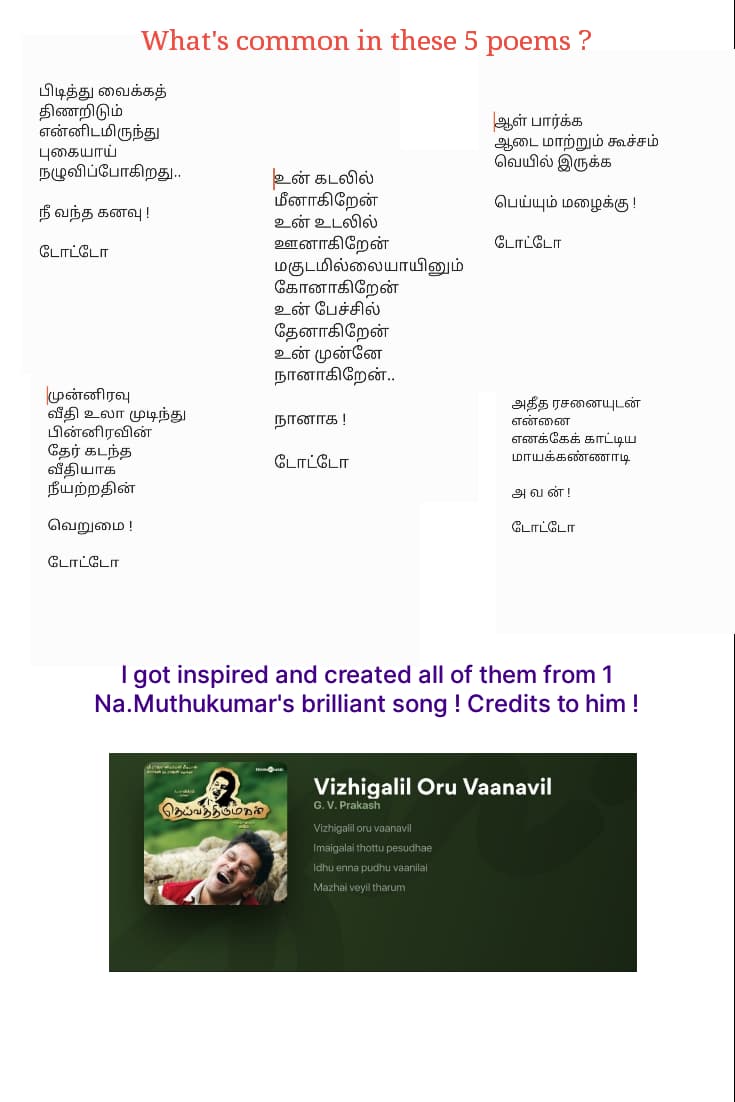
The song "Vizhigalil Oru Vanavil" (A Rainbow in the Eyes) was heard at a cultural event. After listening repeatedly (about seven times) while walking, specific poetic inspiration emerged.
Below is a detailed exploration of how original song lines sparked new poetic interpretations:
| Original Song Line (Trigger) | Speaker's Analysis / Interpretation | Speaker's New Poetic Line |
|---|---|---|
| "இது என்ன புது வானிலை மழை வெயில் தரும்" (What is this new weather, rain giving sun?) |
The combination of sun and rain is likened to the shyness (*koocham*) of changing clothes while being observed (since normal rain is like dressing privately, in darkness). | "ஆள் பார்க்க ஆடை மாற்றும் கூச்சம் வெயில் இருக்க பெய்யும் மழைக்கு" (The shyness of changing clothes while being watched, for the rain that falls while the sun is present) |
| "கண்ணாடி போல தோண்டினாய் என் முன்னே என்னை காட்டினாய்" (You appeared like a mirror, showing me myself before me) |
This is interpreted as the lover showing the speaker themself with appreciation (*rasanaiyudan*). | "ரசனையுடன் என்னை எனக்கே காட்டிய மாய கண்ணாடி அவன்" (He is the magical mirror who showed me myself with appreciation) |
| "தேர் போன பின்னே வீதி என்ன ஆகுமோ" (What will happen to the street after the chariot leaves?) |
This line represents void, blankness, and solitude (*thanimai*). The speaker compares it to a train disappearing and leaving an empty space. | "முன்னிரவு, வீதி உலா முடித்து, பின்னிரவின் தேர் கடந்த வீதியாக நீயற்றதின் தனிமை" (The solitude of your absence, like the street after midnight, following the chariot procession that ended in the early evening) |
| "நான் என்ன வேணும்" (What should I become?) |
The speaker feels the highest expectation in a relationship is to remain authentically oneself ("நான் நானா இருக்கணும்") without predetermined assumptions or masks. This led to wordplay about becoming fish, food, king, and honey. | "உன் முன்னாடி நான் ஆகிறேன் நானாக" (Before you, I become myself) |
| "நீ வந்த கனவு எங்கே காற்றில் கை வீசினேன்" (Where is the dream you brought, I waved my hand in the wind) |
This describes the feeling of a fading dream that cannot be held or recaptured - the ephemeral nature of beautiful moments. | "பிடித்து வைக்க தேனிடம் என்னிடமிருந்து புகையாய் நழுவி போகிறது நீ வந்த கனவு" (The dream you brought slips away from me like smoke, even though I try to hold it) |
Listening to lyrics with a "Poetry Mind" means these words and concepts constantly run in the background, enriching our understanding of language and emotion.
Example from Vijay Antony's song in Velayudham: The lyricist used the regional word "பானலி" (paanali) instead of the common "வாணலி" (vaanali) for a frying pan. This highlights how word choice and sound can be appreciated for the trigger or feeling they provide.
One doesn't need deep knowledge of Tamil epics like Kambaramayanam or Silapathigaram to enjoy song lyrics. Simply understanding the inherent beauty and appreciating the language within the song is a significant process in itself.
Sometimes we engage in abstract poetry, making our own assumptions about what the original lyricist (like Na. Muthukumar) intended, even if they're no longer available to explain it. This personal interpretation is part of the beauty of lyric appreciation.

This analysis demonstrates how a single song can spark multiple poems and deep reflections. The practice of lyric appreciation is not just about understanding words - it's about letting them live within us, transform us, and inspire new creative expressions.
Through this lens, every Tamil film song becomes a doorway to poetry, philosophy, and personal discovery.